Showing posts with label AdSense features. Show all posts

Thursday, 12 October 2006

Introducing multiple custom channels

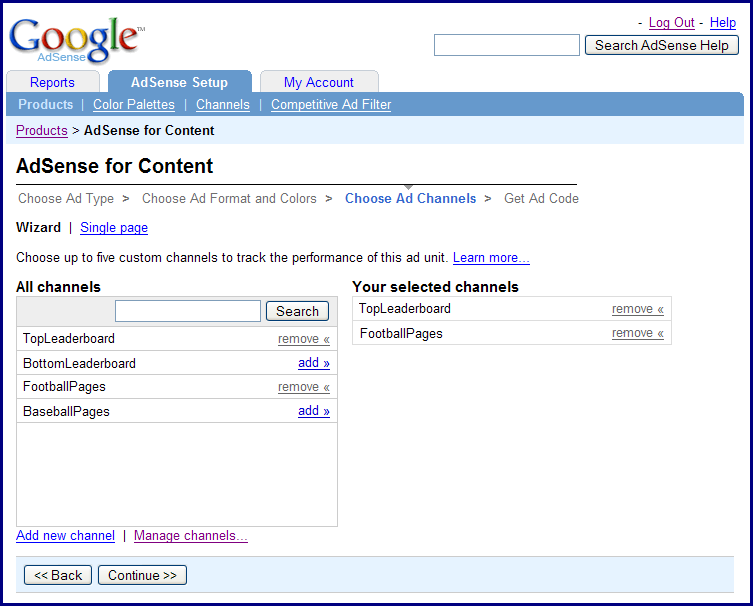
As of today, it is now possible to assign multiple custom channels to a single ad unit. This feature enables you to track your ad performance with greater flexibility and view more granular information. When generating your ad code, you'll be able to add up to 5 custom channels to a specific instance of ad code.


What's the benefit of tracking with more than one custom channel? Well, multiple channels can be very useful when you want to track one ad unit across several different metrics simultaneously. For example, let's say you run a sports website and you've placed a leaderboard at the top and bottom of every page. To track the performance of the ad placement, you've created two custom channels -- 'TopLeaderboard' and 'BottomLeaderboard' -- and regenerated your ad code appropriately.

But what if you also want to compare your football pages and your baseball pages at the same time? With multiple custom channels, this isn't a problem. Just create two new custom channels called 'FootballPages' and 'BaseballPages', and add them to the appropriate ad units. Now your leaderboards will each be tagged with two custom channels that let you know which position they're in (top or bottom), and the type of page on which they appear (football or baseball).

Please keep in mind that ad units tagged with multiple custom channels will log impressions or clicks in each channel. As a result, you'll see a higher number of impressions and clicks when you view your channel reports than when you view your aggregate reports.

If you'd like more information about setting up multiple channels, please visit our Help Center.

Wednesday, 4 October 2006

The missing link

Even if your site is well-designed, with colors that look great and ad formats that your users respond well to, you still might hear a nagging voice inside your head that says, "There must be more I can do!" If this sounds familiar, then we've got a cure -- link units work wonders when you're looking for additional ways to give your AdSense performance a pick-me-up. They offer your users fresh, new content and can be customized and tracked just like standard text ads.

If the voice in your head is still there, it's likely asking, "Where should I place link units on my pages?" Here are some ideas to get the ball rolling:
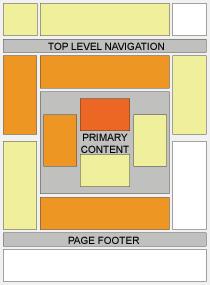
  • Above or below a navigation menu or site search box -- but remember to keep your link units distinct
  • Above the fold, at the beginning of pages with more focused content where people may be seeking specific information (article pages, category-level pages)
  • In prime spots as designated by our heat map
Looking for more ideas? Our link unit example page might help.


Link units proved to be the missing link for several of our publishers- you might remember reading about how Engineeringtalk, Ask The Builder, and PCFreunde saw their AdSense earnings soar after adding link units to their pages.

With 12 different sizes, you're bound to find a size that fits snugly into those "hard to reach" areas of your site.

Thursday, 21 September 2006

New channels page, new ad format

This week we bring you two key improvements to AdSense that came about directly from publisher feedback.

First off, you'll be happy to hear that we've completely revamped the Channels page under your AdSense Setup tab. Besides cleaning up the design by housing each product on its own sub-tab, we've also made it easier for you to take action on your channels. Just select the checkbox next to a channel and then choose to activate, deactivate, remove, or rename the channel you've selected. You can also find more information about getting started with channels in our Help Center.


We're also launching the new 200 x 200 size ad format, better known as the small square. This ad format supports text, image and video ads, and we hope that you'll find it a useful option when integrating your ads into your site.


If you have other suggestions for future product features, we'd love to hear them!

Tuesday, 19 September 2006

Video post: Want search results?

A few weeks ago, we told you that publishers can display AdSense for search results within their own sites. Now AdSense Product Manager Shirin Oskooi explains the benefits and provides a short demonstration in this video.


Interested in implementing search results within your own site? Just visit our Help Center for instructions.

Thursday, 17 August 2006

How to win advertisers and influence ad competition

UPDATE: Sorry, the Onsite Advertiser Sign-up feature is no longer available.

For today’s optimization tip, I'd like to focus on a site targeting feature: Onsite Advertiser Sign-up. This enables advertisers to quickly and easily target cost-per-impression (CPM) ads specifically to your site, from your site.

As a publisher, you'll be automatically opted in to Onsite Advertiser Sign-up. You can also customize the landing page advertisers will see when they click on the ‘Advertise on this site’ link within your ad units. This is your opportunity to market your site to advertisers, so don’t settle for the default description – this won’t convince advertisers why they should site target you. Write a sharp and compelling paragraph to engage advertisers and let them know what your site’s all about.


You'll benefit when more advertisers sign up to advertise on your site, since more competition among ads means more money for you. Just remember - keep it advertiser-friendly!

Wednesday, 16 August 2006

Search no further than your own site

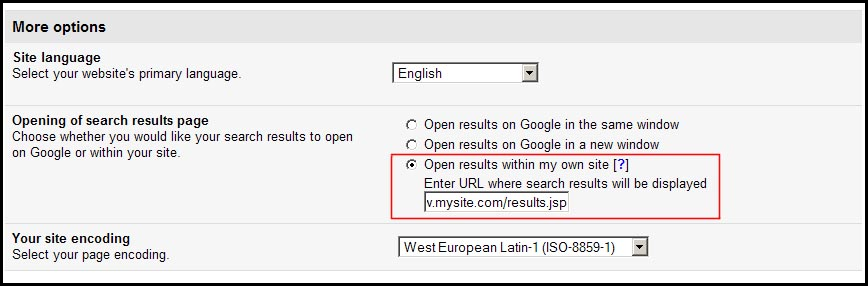
If you haven't tried our AdSense for Search feature yet, now might just be the perfect time to put it to use -- we're pleased to announce that you can now display AdSense for search results within your own site. This way, you have the freedom to offer users web search while still maintaining the look and feel of your site. For example, you can keep elements like the header, footer, and site navigation panel the same for the search results page you create.

To use it, just choose the "Open results within my own site" radio button when you're generating your AdSense for search code. You'll also need to identify the page where you'd like to display your search results.


We'll give you two sets of code: one for the search box, and one for search results. Place the first set on a page where you'd like the search box to appear, and the second set on the page you'd like the search results to appear. Whenever users perform searches on your AdSense for search box, they'll be directed to the page on which you placed the search results code.

Since this new feature is part of AdSense for search, any Competitive Ad Filter and site-flavored search settings will still function as normal. You can also find detailed instructions for implementing this new option in our Help Center. Keep in mind that if you want your existing search boxes to take advantage of the new feature, you'll need to replace the search box code that's currently on your pages.

Tuesday, 15 August 2006

Referrals around the world

Back in May, we launched our new and improved referral buttons. Now these new buttons are available for additional products and languages. You can choose from several different colors and options, and the buttons are in a sleeker, web-friendly GIF format -- all the better to blend in with your site.


Publishers have found that it’s most beneficial to place referrals where they're relevant. Do you run a photo blog? Try using a Picasa referral button. Looking to boost revenue for your web hosting site? Implement a Firefox referral button and watch your earnings grow.

Don’t forget you can also implement referrals in a text link format. Text links easily integrate into your site and often convert better than buttons. Here are a few tips on generating more revenue with text links:
  • You can endorse products you've enjoyed using and encourage your users to do the same.
  • Use text links to integrate the ad more seamlessly within your site content.
  • Try having the text links inherit the font and look of your site, so they fit in with your current text style and size.


If you’re not already displaying referrals on your site, you may be missing out! Publishers have let us know that they’ve seen an increase in earnings since they implemented the feature. One publisher with a history-related site told us, “I get 3,000 uniques a day, and was only making about $15/day with regular AdSense for content. Today, I tried Firefox referrals and beside my regular site income, I've already made an extra $17.20 -- and the day isn't over yet.”

Not only will you benefit from the extra earnings, but your users will learn more about other products such as Picasa, Firefox, and AdWords. To begin displaying the new referral buttons, simply choose Referrals from the AdSense Setup page of your account, then select the product you'd like to refer users to on your pages.

Tuesday, 25 July 2006

Where did my 'framed pages' checkbox go?

Some of you may have noticed that the 'framed pages' checkbox has disappeared from your account – but don't worry, you can still place ads on framed pages by generating your code as you would for any other page. You'll no longer need special ad code, and we'll target ads based on the text content in the frame where the ad code is pasted. To receive relevant ads, please be sure to paste your ad code into the same frame as the primary content of your page.

Friday, 21 July 2006

Run, don't crawl, to the new Site Diagnostics page

If you've ever wondered whether our crawler is able to reach all of your pages, you should try out the new Site Diagnostics tool. To determine the meaning of your site and show relevant ads, our crawlers need to be able to access your pages. Site Diagnostics enables you to see some of the errors our crawler finds while it's crawling. You can find the Site Diagnostics page listed under the Reports tab of your account.


If our crawler is having trouble reaching any of your pages, you'll see those URLs listed in the Blocked URLs section of the Site Diagnostics table. At the moment, we're displaying two types of errors:

  • URL not found – this means our crawler wasn't able to reach your pages, most likely because your server was temporarily down

  • Robots.txt file – this indicates that your robots.txt file was blocking our crawler from visiting

  • For help resolving either of these issues, just head over to the the AdSense Help Center. You can also access more general information about our crawler.

    If you don't see any errors listed on your Site Diagnostics page but still want to improve the relevance of your Google ads, visit the following entries:

  • Why are my ads not relevant?

  • Why am I getting PSAs?

  • Wednesday, 5 July 2006

    Your ad targeting questions answered

    Andre asks: We are an online travel agency and recently put some Google ads on our site. Is there a way to make our ads more targeted to topics such as airlines, hotels, and etc.?

    We say: Andre, this is a good question. As you may know, AdSense technology automatically determines which ads to display on your pages based on the overall content of that page; we can't manually target ads to specific keywords or categories. However, if you'd like to display ads related to topics like airlines or hotels, you can add more text-based content about these topics to your site. Make sure to include complete sentences and paragraphs to help our crawlers gather information about your pages and determine relevant ads to display. Also, if you do make changes to your site, keep in mind that can take a week or two before those changes are reflected by your ad targeting.


    Mike asks: I have a blog with posts on different topics. How do I ensure that my ads are always targeted to the most recent post?

    We say: Mike, have you tried section targeting? Section targeting allows you to suggest sections of your text and HTML content that you'd like us to emphasize or downplay when matching ads to your site's content. We want to make sure you're always receiving your maximum revenue potential, so our technology automatically detects whether your targeting suggestions will improve your revenue and adjusts accordingly.


    Jessica asks: I’ve noticed some dating ads recently, which are not really appropriate for our site. How do I filter all the ads that contain word ‘dating’?

    We say: Jessica, we don't currently offer the option to filter ads by keywords or topics. However, you can prevent unwanted ads from showing on your site by using the Competitive Ad Filter in your account. You can filter ads from up to 200 URLs from advertising on your site.


    Jonathan asks: We have a commerce site that sells kitchen appliances. As soon as we implemented AdSense, ads from our direct competitors began to appear. We're using the Competitive Ad Filter list, but do you have any other tips that might benefit a site like ours?

    We say: Jonathan, first, we recommend testing AdSense on a few pages to see how it performs. Some commerce publishers find that AdSense complements their sites by adding an additional revenue source without affecting their bread and butter businesses.

    If you find that's not the case for you, there are still ways you can use AdSense strategically. For example, you might want to place Google ads on checkout pages or sales confirmation pages to provide your customers another action to take when they've completed shopping. If you're an AdWords advertiser, you can place ads on the pages where you normally place your conversion tracking code. However, if you use this placement, please make sure you're in compliance with our program policies regarding non-content pages. You should only place the AdSense code on checkout or sales confirmation pages if they contain signficant text-based content, which ensures that we're able to serve relevant ads.

    You can also use a web analytics tool to figure out from which pages your visitors exit your site. If you're losing traffic without sales on a few specific pages where your users aren't finding what they're looking for, AdSense might provide a good 'next step' to help you monetize this traffic without compromising your business objectives.

    Thursday, 29 June 2006

    Have a track attack with new referral channels

    We've added the option to assign channels to your referral units. Now, when you're generating the code for any referral unit, you can specify a channel to track the performance of that specific referral unit.

    You can use the more detailed channel reporting to track anything from whether text or button referral formats perform better, to whether Firefox referrals are more successful on your product pages or your news pages. Channels will help you experiment to find out what's most effective in referring users from your site.

    With the addition of channels for the referrals feature, now might be a good time to brush up on your channel expertise by reviewing our channel guide.


    Friday, 16 June 2006

    Everything you want to know about the AdSense API

    A few weeks ago we ran a post about the new AdSense API. Now we'd like to respond to some of your questions.

    Can I participate?

    Because we're still in beta, we're currently accepting developer applications. We're looking for developers who are likely to have 100,000+ daily AdSense impressions through the API. After you've applied, you should hear back from us within a few weeks.

    What is the AdSense API?

    The AdSense API is a free beta service that enables you to integrate Google AdSense into your website offerings. Using the AdSense API, you can enable users to perform a variety of AdSense functions without ever leaving your website. Users can create or manage their AdSense accounts, modify their AdSense ads, and view ad performance and earnings reports. Furthermore, you can earn money by receiving a percentage of the revenues generated by the ads placed on your site.

    How much money will I earn?

    This depends on how many AdSense publishers you sign up, and how much they earn. For each new publisher you sign up, you will earn a bounty of $100 once they have earned $100. Furthermore, you will receive 15% of the revenue generated by Google ads served using your API implementation. For details, please refer to our Terms & Conditions, Section IV, Paragraph 6.

    Who should use the API?

    Anyone with a large user base that publishes its own content (like blog hosts, wiki hosts, ISPs, or even social networking sites) should look into integrating the API with their application. By giving your users a chance to earn money using your service, you have an opportunity to differentiate your service from your competition while generating additional revenue.

    If I'm accepted into the beta program, what kind of support will I get in implementing the API?

    At the moment, we're looking into different support possibilities. We've set up a Google Group for our beta partners, which we will monitor so we can answer any outstanding questions. Additionally, we have a continually-growing developer site, complete with examples. We're also considering ways to expand our support for larger partners.

    Wednesday, 31 May 2006

    Introducing the AdSense API beta

    If you're a web developer or host, now you can generate more revenue and improve your service with the new AdSense API. The AdSense API is a free beta service that allows you to integrate AdSense into your website offerings.

    What can I do with the AdSense API?

    Using the AdSense API, you can enable users to perform a variety of AdSense functions without leaving your website, including the following:

    - Create an AdSense account
    - Manage an AdSense account
    - Create and modify AdSense for content ad units and link units, AdSense for search boxes, and Referrals
    - View detailed reports to monitor performance and earnings

    How does the AdSense API benefit your site and users?

    By making it easy for publishers to sign up for AdSense and generate revenue, the API offers another compelling reason for publishers to choose your service over a competitor's--and remain loyal to you. The AdSense API is great for publishers who don't want the hassle of setting up their own accounts or dealing with cutting and pasting HTML snippets.

    How does this generate revenue for you?

    Approved AdSense API developers will receive a share of the revenue earned by the publishers you've signed up. In addition to the revenue share, you'll also receive $100 each time a new publisher you've signed up earns $100 in less than 180 days. This means that developers who currently charge for services can now use the AdSense API to offset some of the costs of your services--maybe even making it possible to offer your services free of charge.

    Additionally, as the developer, you can optimize your ad's placement, color, and format to increase your users' earnings--and your users don't have to do any additional work to display optimized ads.

    Interested?

    We've started taking applications from people whose sites receive a minimum of 100,000 daily page views. To be eligible, your site must register users who then maintain their web content through your site. The types of sites we're looking for include web hosts, blog hosts, Wiki hosts, forum hosts, and web publishers.

    Visit the AdSense API web site for more information. To see if you qualify for our beta, submit an application today.

    Friday, 26 May 2006

    Video ads: Your questions answered

    A couple of days ago, we launched click-to-play video ads. We thought we'd follow up with answers to some of your top questions:

    Will video ads slow down my site? Do I have to pay for bandwidth?

    Google will host the video, and it is user-initiated, so it will not slow down your site and you will not have to pay for the bandwidth. No data will be transferred until the user presses "Play."

    Are video ads intrusive to my users?

    Not at all. If a video ad appears on your site, it will always show up as a static image until a user clicks on the "Play" button. In other words, nothing plays automatically, and everything is user-initiated. Additionally, the video-ad UI allows users to control sound.

    How will I be paid for video ads?

    Video ads can be either site targeted or contextually targeted. Publishers will be paid for site-targeted video ads on a CPM basis. For contextually targeted video ads, publishers will be paid for clicks to the advertiser's landing page. Clicks are generated either by clicking on the display URL at the bottom of the ad, or by clicking on the video itself during play.

    Will I earn more from video ads?

    We can't guarantee the earnings potential of video ads (or any ad served through AdSense, for that matter). However, video, text, and image ads compete for placement on your site in the same ad auction. AdSense automatically shows the ads with the highest Ad Rank for each ad unit at that moment. For a video ad to display, its eCPM has to be greater than the projected eCPM of any combination of CPC ads competing to display in the same ad unit at that time.

    Will the video ad be targeted to the content of my site?

    If the video ads are contextually targeted to your site, then yes. Video
    ads may also be site targeted, which means advertisers specifically select to show their video ads on your site because they feel the ad's message is highly relevant for your site's audience.

    What is the duration of each video ad?

    While the length may vary, video ads can be up to two minutes long.

    Can I watch the videos appearing on my own site?

    Yes, you can watch the videos appearing on your site by clicking on the "Play" button--this will not affect your reports. However, please do not click on the advertiser's URL, or on the ad itself, which will also bring you to the advertiser's site. Clicking on the ad or URL could generate invalid clicks on your account and inflate advertiser costs.

    Do I get to preview video ads before they're displayed on my site to make sure there isn't any inappropriate content?

    All video ads are screened against the Video Editorial Guidelines set by AdWords, so like all Google ads displayed through AdSense for content, they are family safe.

    What do I need to do to get video ads on my pages?

    Opt into image ads, within any of the following ad formats:

    - 336 x 280 (Large rectangle)
    - 300 x 250 (Medium rectangle)
    - 250 x 250 (Square)

    This sounds great! How can I get advertisers to site-target me so I can show video ads to my users?

    Make sure to read this advice from Bismarck Lepe of the Google AdWords team. Also, the Help Center is a great resource for any further questions you might have.

    Thursday, 25 May 2006

    Redesigned AdWords referral buttons now available internationally

    We've extended our new AdWords referral button designs internationally. The new designs offer several colors and options to choose from, along with a more web-friendly GIF image.

    To start displaying the new AdWords referral button of your choice, select Referrals on the AdSense Setup tab of your account and follow the guided referrals wizard.


    Tuesday, 23 May 2006

    Introducing video ads

    Introducing the newest member of the AdSense ad family--click-to-play video ads. Video ads will compete in the same auction as text and image ads for placement on your site, and as we've mentioned before, increased competition in the ad auction means increased revenue potential for you. Video ads open your site up to a whole new type of advertising that is engaging and highly relevant for your users.

    We know you're curious as to what these new video ads look like, so here's a sneak preview:


    There are no guarantees that click-to-play video ads will appear on your site; however, to increase the chances make sure to:

    1) Opt into image ads.

    2) Use one of the three ad formats that support video ads: 300x250 Medium Rectangle, 336x280 Large Rectangle, or 250x250 Square.

    Also, keep in mind that there are a few things advertisers look for when targeting their ads to specific sites.

    Got questions about video ads? We've got answers--check out the Help Center for more information.

    Thursday, 18 May 2006

    Announcing more referrals options for international publishers

    Last month, we announced the launch of text links for referrals for US English only. We're now pleased to let you know that text-link referrals for AdWords, AdSense, Picasa, and Firefox are now available for all AdSense languages.

    We've also extended the referrals feature to four new languages: Czech, Croatian, Slovak, and traditional Chinese. Referrals for both AdSense and AdWords are available for these new languages. You'll earn $100 when the publisher you refer to AdSense earns his or her first $100, and $20 once an advertiser you've referred spends at least $100 with AdWords.

    To display a referral button on your site, simply choose Referrals from the AdSense Setup page of your account, then select the product you'd like to refer users to on your pages. For more information on how much you'll earn from referrals, you may wish to visit the AdSense Help Center.

    Wednesday, 10 May 2006

    Get site-targeted with quality, placement and size

    As someone on the inside track for site targeting, the AdSense team asked me to share a word with you regarding what advertisers are most keen on when selecting sites for their site-targeted campaigns.

    For advertisers -- and especially traditional brand marketers -- the name of the game is brand engagement and association. When purchasing ad space, advertisers focus on three elements of a website: quality of content, physical placement of the ad unit, and ad unit size.

    1. Quality - Let's face it, advertisers are all about attracting user interest. When selecting places to advertise online, they look for sites that incorporate high quality and unique content in combination with good navigation, layout and features. It goes to reason that if users like the site, then advertising on these sites will build positive brand association or "positive brand karma".

    2. Placement - In site targeting, "above the fold" ad placements are important to advertisers because they're paying for these ads on a cost-per-thousand impressions (CPM) basis. Eye-tracking analysis has shown that users are more likely to engage with ad placements that appear in the upper left-hand corner of a page.


    It's important to advertisers that when a page loads, people see and interact with the ad. The greater the level of user engagement, the higher advertisers are willing to bid to display on a site.

    Opting into both text and image ads also helps, because it gives advertisers more options for what types of ads they can display on your site.

    3. Size - In advertising, size does matter; bigger ads are more likely to be seen. The AdSense program offers many ad formats for you to use on your site. Among them, the 336 x 280 Large Rectangle, 300 x 250 Medium Rectangle, and 250 x 250 Square are the larger ad units and consequently, the ones advertisers most value. Average CPMs for these sizes are usually 300% higher than a typical 468 x 60 Banner ad.

    Of course, incorporating these elements doesn't guarantee that your site will be site-targeted, but it can certainly increase the chances by making it more advertiser-friendly.

    Friday, 5 May 2006

    Referral buttons get a makeover

    Every once in a while we like to give AdSense features a new look. This time, we're excited to announce the new and improved referral buttons for AdSense, Firefox with Google Toolbar, AdWords, Google Pack and Picasa. With the sleeker design comes a more web-friendly GIF image and several additional colors to choose from -- all to help the button feel more at home on your site.

    The new buttons are currently available to US English publishers, and we hope to roll this out for all countries and languages supported by AdSense for content. To try out the new buttons, choose Referrals on your AdSense setup tab and follow the instructions to start displaying the button of your choice.


    UPDATED pictures and for accuracy

    Thursday, 4 May 2006

    New referrals for Google Pack and Picasa

    We're happy to announce that, in addition to AdSense, AdWords, and Firefox with Google Toolbar, you can now refer your users to Google Pack and Picasa. You'll earn up to $2 for each time a user installs Pack and up to $1 for each Picasa install. Although Picasa referrals will be available for several AdSense languages, Pack referrals are currently only offered in US English.

    To display Pack and Picasa referral buttons on your site, all you have to do is select Referrals from the AdSense Setup page of your account, and then select the product of your choice. And remember, now US English publishers can use text links for your referrals.


    UPDATED for accuracy.