We know that you’ve worked hard to create quality content for your sites, and that you look for the same quality in the ads you’re displaying. That’s why we’re happy to let you know about a change in AdWords that will improve the quality of ads.
Recently, we have begun incorporating the quality of an ad's landing page into the determination of what ads appear on your site. The quality of the ad's landing page now affects the Quality Score that the ad receives -- this score helps to determine the amount an advertiser must bid to appear on your site. The lower the Quality Score, the more "expensive" it is for the advertiser to show up on your site. As a result, you should see fewer ads on your pages which lead to low-quality sites.
And what defines low quality? We've published a general set of landing page and site guidelines. We encourage advertisers to offer relevant, substantial content so that visitors can find what they are looking for when they click on ads. Ensuring that the ads that appear on your site are high quality is an important part of our efforts to make sure that we provide the best experience for your visitors.
Showing posts with label Other Google products. Show all posts
Showing posts with label Other Google products. Show all posts
Tuesday, 7 November 2006

Monday, 23 October 2006
What's up, Docs & Spreadsheets?
Have you ever struggled to keep track of different versions of your documents or site layouts while collaborating with other webmasters? If so, you'll find Google Docs & Spreadsheets the best pain reliever ever -- it's our new web-based word processing and spreadsheet program to help manage your site's content and easily share it with others.
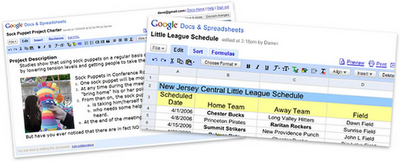
With Google Docs & Spreadsheets, you can edit and save in HTML to create mock-ups of your webpages. You're also able to access your files from any computer via a web browser, and easily send them to collaborators to review and edit. Even more exciting, you can view all past revisions to your file, so if you change your mind about that bright purple highlighting after you've put it into your document, simply revert back to a previous version.
Google Docs & Spreadsheets also provides an easy way to distribute content. Your users won't need to download anything from your site; just create your content in Docs & Spreadsheets or upload an existing file, publish it, and then link directly to the file from your website.
Aside from all the web publishing benefits Google Docs & Spreadsheets offers, it's also a great tool for managing a small business. You can collaborate and share information about your online ad activities, draft proposals and budgets, and keep track of your Google Analytics tags all in one place. Many of the entries on this blog wouldn't have turned out quite so well without team collaboration on the content using Docs & Spreadsheets.
Google Docs & Spreadsheets is free, secure and easy to try out. Get started by uploading your desktop files. Check out the product tour for an overview of how the product works, or just sign up here.
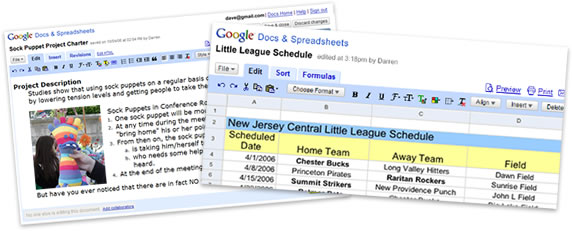
With Google Docs & Spreadsheets, you can edit and save in HTML to create mock-ups of your webpages. You're also able to access your files from any computer via a web browser, and easily send them to collaborators to review and edit. Even more exciting, you can view all past revisions to your file, so if you change your mind about that bright purple highlighting after you've put it into your document, simply revert back to a previous version.
Google Docs & Spreadsheets also provides an easy way to distribute content. Your users won't need to download anything from your site; just create your content in Docs & Spreadsheets or upload an existing file, publish it, and then link directly to the file from your website.
Aside from all the web publishing benefits Google Docs & Spreadsheets offers, it's also a great tool for managing a small business. You can collaborate and share information about your online ad activities, draft proposals and budgets, and keep track of your Google Analytics tags all in one place. Many of the entries on this blog wouldn't have turned out quite so well without team collaboration on the content using Docs & Spreadsheets.
Google Docs & Spreadsheets is free, secure and easy to try out. Get started by uploading your desktop files. Check out the product tour for an overview of how the product works, or just sign up here.
Tuesday, 10 October 2006
Go go Google Gadgets
Wouldn't it be great to get your content in front of people while they're visiting Google.com or other webpages? More eyeballs on your site means more opportunities for your content to reach visitors, along with, of course, your AdSense ads. Google Gadgets enables you to do just that.
Gadgets are miniature devices that offer cool, dynamic content ranging from games to news clips to weather reports to just about anything you can dream up. They've been around for a while, but their reach got a lot broader last week when we made it possible for anyone to add gadgets to their own webpages. That means you! Here's an example of a flight status tracker, for instance, that can be placed on any page on the web.

You can search for free gadgets to add to your own webpages in our directory of gadgets for your webpage. To display a gadget, just pick the one you like, set your preferences, click "Get code," and copy-and-paste the HTML onto your own page. Add some 'bling' to your site and 'wow' your readers!
Creating Google Gadgets from your own content for others to use isn't hard, either -- anyone with even a bit of web design experience can make a simple one in HTML, and more advanced programmers can create really snazzy complex applications. But remember, it’s also quick and easy for people to delete gadgets and add new ones to their own pages. To help you make sure your gadget will be popular across the web, we provide a few guidelines to keep in mind. The more valuable visitors find your content, the longer they'll keep your gadget on their pages, the more often they’ll visit your site -- and the better that can be for your AdSense performance.
Here are a few other suggestions for successfully distributing your own content on the Google homepage or other pages across the web:
Gadgets are miniature devices that offer cool, dynamic content ranging from games to news clips to weather reports to just about anything you can dream up. They've been around for a while, but their reach got a lot broader last week when we made it possible for anyone to add gadgets to their own webpages. That means you! Here's an example of a flight status tracker, for instance, that can be placed on any page on the web.

You can search for free gadgets to add to your own webpages in our directory of gadgets for your webpage. To display a gadget, just pick the one you like, set your preferences, click "Get code," and copy-and-paste the HTML onto your own page. Add some 'bling' to your site and 'wow' your readers!
Creating Google Gadgets from your own content for others to use isn't hard, either -- anyone with even a bit of web design experience can make a simple one in HTML, and more advanced programmers can create really snazzy complex applications. But remember, it’s also quick and easy for people to delete gadgets and add new ones to their own pages. To help you make sure your gadget will be popular across the web, we provide a few guidelines to keep in mind. The more valuable visitors find your content, the longer they'll keep your gadget on their pages, the more often they’ll visit your site -- and the better that can be for your AdSense performance.
Here are a few other suggestions for successfully distributing your own content on the Google homepage or other pages across the web:
- If your website has a feed, visitors can put snippets of your content on their own Google homepages quickly and easily -- you won't even need to develop a gadget. However, you'll be able to customize your visitors' experience much more with a gadget than with a feed.
- By putting the "Add to Google" button in a prominent spot on your site, you can increase the reach of your content, because visitors who click to add your gadget or feed to Google can see your content each time they visit the Google homepage. Promoting your own gadget or feed can also increase its popularity, which contributes to a higher ranking in the Google personalized homepage directory.
Thursday, 28 September 2006
Embed and enjoy
Over the past few months, we've drawn attention to the value of video, and specifically, of embedding video on your sites. We're happy to announce that Google Video is now available for Australia!
Our Australian friends can search for the most popular videos in Australia and embed them on their own sites, all within a localized (or rather "localised") interface. Not only is there the usual treasure trove of footage uploaded by individual users already on Google Video, but the AU team has worked closely with great partners like ABC, AFTRS (the Australian Film, Television and Radio School), Channel 10, Film Australia, Fairfax and SonyBMG. We're sure you'll find some great content amongst these partners and others to enhance your website.
In addition, there are now many ways for you to customize the video player itself and the surrounding page. This way, the player is integrated with your content and will help engage your users. You can:
Our Australian friends can search for the most popular videos in Australia and embed them on their own sites, all within a localized (or rather "localised") interface. Not only is there the usual treasure trove of footage uploaded by individual users already on Google Video, but the AU team has worked closely with great partners like ABC, AFTRS (the Australian Film, Television and Radio School), Channel 10, Film Australia, Fairfax and SonyBMG. We're sure you'll find some great content amongst these partners and others to enhance your website.
In addition, there are now many ways for you to customize the video player itself and the surrounding page. This way, the player is integrated with your content and will help engage your users. You can:
- Resize the player to fit the design of your site by editing the pixel width and height
- Set the player to autoplay on page load, or start playing at a specific point in the video
- Get creative in the way you design the area surrounding the player (there's a great example here)
Tuesday, 26 September 2006
Focus on your content -- we'll do the rest
Provide a great user experience, and the money will follow. We've found this to be true time and time again with our own products and services. For publishers like you, this starts with offering content that's meaningful to your visitors. The more you can focus on your core asset -- your site's content -- the more successful you can be with AdSense.
We just launched a service that can help you spend less time, energy, and money on one of the biggest distractions for publishers: maintaining IT systems. Google Apps for Your Domain lets you offer powerful communication and collaboration tools including Gmail, Google Calendar and Google Talk to everyone with an account on your own domain, people within your organization and/or members of your community. You can private-label the interfaces to make them your own, and best of all, everything is managed on Google's scalable, secure systems, just like AdSense. No servers to install or maintain, no spam upgrades to think about, and no special software required.
And sticking with our own credo to focus on the user experience above all else, Google Apps for Your Domain is free. Learn more and get started here.

We just launched a service that can help you spend less time, energy, and money on one of the biggest distractions for publishers: maintaining IT systems. Google Apps for Your Domain lets you offer powerful communication and collaboration tools including Gmail, Google Calendar and Google Talk to everyone with an account on your own domain, people within your organization and/or members of your community. You can private-label the interfaces to make them your own, and best of all, everything is managed on Google's scalable, secure systems, just like AdSense. No servers to install or maintain, no spam upgrades to think about, and no special software required.
And sticking with our own credo to focus on the user experience above all else, Google Apps for Your Domain is free. Learn more and get started here.
Thursday, 7 September 2006
Add fun, dynamic content without all the work
I'd like to share this earth-shattering news with you: David Hasselhoff (of Knight Rider and Baywatch fame) has come out with a classic new music video that should not be missed. How did I find out about it? I saw a dynamically generated link to it from Google Related Links at the bottom of my blog. (And I've found some other gems that way that have to wait for another post.)
Let me give you what the MBAs call the 8-second elevator pitch (our buildings are not very tall around here) on Google Related Links. The idea is you surf over to http://www.google.com/relatedlinks/ and start creating a Google Related Links unit for your site. You pick the color, size, and types of content (related news, videos, searches, web pages) that you want to appear in this Related Links unit, and then copy the JavaScript over to your site just as you would do for an AdSense ad unit. Google crawlers will then crawl your site, see what type of content is there, and then dynamically show links in the unit that relate to your site.

While Google Related Links don't give you revenue directly, you can use them to keep your site fresh and interesting without any maintenance. Happy visitors mean repeat visits. And if you're feeling especially creative, try alternating between Google ads and Google Related Links in a given space on your page. This will encourage people to look in that space for interesting dynamic content.
Oh, and by the way, you're more than welcome to click the links in a Google Related Links unit on your own site. Happy surfing!
Let me give you what the MBAs call the 8-second elevator pitch (our buildings are not very tall around here) on Google Related Links. The idea is you surf over to http://www.google.com/relatedlinks/ and start creating a Google Related Links unit for your site. You pick the color, size, and types of content (related news, videos, searches, web pages) that you want to appear in this Related Links unit, and then copy the JavaScript over to your site just as you would do for an AdSense ad unit. Google crawlers will then crawl your site, see what type of content is there, and then dynamically show links in the unit that relate to your site.
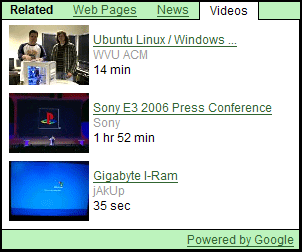
While Google Related Links don't give you revenue directly, you can use them to keep your site fresh and interesting without any maintenance. Happy visitors mean repeat visits. And if you're feeling especially creative, try alternating between Google ads and Google Related Links in a given space on your page. This will encourage people to look in that space for interesting dynamic content.
Oh, and by the way, you're more than welcome to click the links in a Google Related Links unit on your own site. Happy surfing!
Friday, 25 August 2006
Insight into your site
We hope you've gained insight into the various tools and products Google has to offer for increasing the visibility of your site. As Boyar promised, we’ll close out this week's theme a little differently, by sharing with you the story of a publisher who used a number of Google products to increase his site's audience 50-fold in just two months.
Ryan, webmaster for TropicalYarns.com, had been using AdSense for content and AdSense for search to monetize his pages. However, he noticed that his site’s visitors consisted mainly of existing customers. Using Analytics, he was able to better understand his new and returning visitors. After pinpointing the most popular page on his site in June, he added an email newsletter sign-up form to that page and saw the subscription list grow by 20%. In just one month, he watched new visitors grow to 75% of his audience.

At the same time, Ryan used AdWords to advertise his site’s offerings. After experimenting for three weeks to optimize his ads, he was able to achieve a higher clickthrough rate and bring more engaged users to his site; in July, 14% of his site’s visitors arrived via an AdWords ad, and these visitors made up 22% of pageviews for the month. Plus, by using his Analytics reports to determine the search keywords which brought users to his site, he was able to make informed decisions about his ads. For example, because the search phrase "free patterns" drove organic traffic to his site, he knew he didn’t need to run ads for that phrase.
Since Tropical Yarns is a retail store, Ryan also decided to experiment with products such as Google Base and Google Checkout. By listing more than 1,000 products on Base and offering customers a way to purchase them online, Ryan reached out to new users; although the store is located in South Florida, interested buyers from all over the United States can now visit the site to make purchases.
Recently, Ryan has been experimenting with Google Video to engage users on his site – future plans include a short commercial for the store, videos of classes, and more. Ryan's story serves as a great example of how you can improve your site's content and visibility through many Google products.
When asked about his overall experience, Ryan commented that "one by one, each of the dozen Google products we used has increased awareness of our website and helped to drive more quality traffic. No single item was overnight magic, but doing them all has proved to be a huge success!"
Ryan, webmaster for TropicalYarns.com, had been using AdSense for content and AdSense for search to monetize his pages. However, he noticed that his site’s visitors consisted mainly of existing customers. Using Analytics, he was able to better understand his new and returning visitors. After pinpointing the most popular page on his site in June, he added an email newsletter sign-up form to that page and saw the subscription list grow by 20%. In just one month, he watched new visitors grow to 75% of his audience.
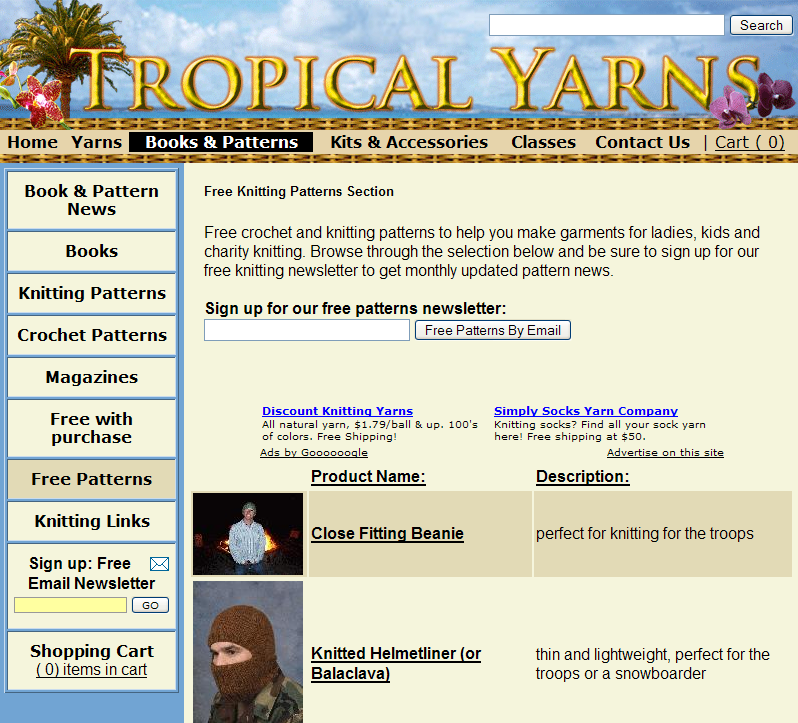
At the same time, Ryan used AdWords to advertise his site’s offerings. After experimenting for three weeks to optimize his ads, he was able to achieve a higher clickthrough rate and bring more engaged users to his site; in July, 14% of his site’s visitors arrived via an AdWords ad, and these visitors made up 22% of pageviews for the month. Plus, by using his Analytics reports to determine the search keywords which brought users to his site, he was able to make informed decisions about his ads. For example, because the search phrase "free patterns" drove organic traffic to his site, he knew he didn’t need to run ads for that phrase.
Since Tropical Yarns is a retail store, Ryan also decided to experiment with products such as Google Base and Google Checkout. By listing more than 1,000 products on Base and offering customers a way to purchase them online, Ryan reached out to new users; although the store is located in South Florida, interested buyers from all over the United States can now visit the site to make purchases.
Recently, Ryan has been experimenting with Google Video to engage users on his site – future plans include a short commercial for the store, videos of classes, and more. Ryan's story serves as a great example of how you can improve your site's content and visibility through many Google products.
When asked about his overall experience, Ryan commented that "one by one, each of the dozen Google products we used has increased awareness of our website and helped to drive more quality traffic. No single item was overnight magic, but doing them all has proved to be a huge success!"
Thursday, 24 August 2006
Google Analytics hearts AdSense publishers
As an AdSense publisher, you've probably put a lot of effort into making your website the best it can be -- optimizing your ads, building good content, and driving high quality visits. But there's one crucial step left: to see just how effective these things are. How many visitors are you getting each day? What pages are they visiting? Where do they come from, and which keywords brought them to your site -- both from pay-per-click efforts and from natural search?
Many website owners push their site live, and then leave it at that, remaining in the dark about all these questions. Google Analytics can enlighten you. We think it's much more fun to have the answers to these burning questions, and that you owe it to yourself to know for sure. After all, this is the payoff for all the hard work that's gone into creating your site. When you launch or make a change to it, there's that initial excitement of wondering who's going to check it out. And Google Analytics can help you with all of this.

It's as easy to set up as AdSense. All you need to do is add a couple lines of code to each page in your site, and to gain valuable insight with graphical representations of visitor levels and detailed, easy-to-use reports that show:
Happy tracking!
Many website owners push their site live, and then leave it at that, remaining in the dark about all these questions. Google Analytics can enlighten you. We think it's much more fun to have the answers to these burning questions, and that you owe it to yourself to know for sure. After all, this is the payoff for all the hard work that's gone into creating your site. When you launch or make a change to it, there's that initial excitement of wondering who's going to check it out. And Google Analytics can help you with all of this.

It's as easy to set up as AdSense. All you need to do is add a couple lines of code to each page in your site, and to gain valuable insight with graphical representations of visitor levels and detailed, easy-to-use reports that show:
- pageviews of each of individual web pages
- the average time spent on each page
- new vs. returning visitors
- visitors' geographical location and language
- their browser and platform choices
- click path data
Happy tracking!
Wednesday, 23 August 2006
Just a click away
You're an AdSense publisher, and you've got great content, but you want a) more people to know about it and b) your loyal readers to know when you post new content so they can visit your site easily -- maybe by the click of a button. By building up traffic, you can get more eyeballs on your content and of course your AdSense ads. This is where Google Toolbar comes in.
There's more to Toolbar than just web search, pop-up blocking and auto-filling web forms. With the recent release of Google Toolbar 4, millions of Toolbar users are now adding custom buttons directly to their browsers. You can help users visit your site (and more) with just a click.

By adding your website's custom button to the Google Toolbar, people can instantly:
There's more to Toolbar than just web search, pop-up blocking and auto-filling web forms. With the recent release of Google Toolbar 4, millions of Toolbar users are now adding custom buttons directly to their browsers. You can help users visit your site (and more) with just a click.

By adding your website's custom button to the Google Toolbar, people can instantly:
- Visit your website
- Search your website by entering a query into the Google search box and clicking your custom button
- Get the latest feeds from your website by clicking the drop-down menu next to your custom button
Tuesday, 22 August 2006
Be webmaster of your domain (or sub-domain)
If a tree falls in the forest and no one can hear it, does it make a sound? Even more perplexing: if you have a great, content-rich website and nobody visits it, is the content useful? Rather than debate this, I'd like to share with you five ways that Google webmaster tools can help you drive more users to your site and improve the visibility of the site content you've worked so hard to create.
1. Submit all of your pages to the Google index – for free.
By using Google Sitemaps to submit your URLs, you help Google's web crawler do a more complete and efficient job of crawling your site. Sitemaps enables you to submit all of your pages to the Google index, and it's particularly useful for making sure that we know about all dynamically generated URLs or pages that are not adequately linked to on your site. But please note: submitting a Sitemap will not guarantee inclusion or influence your PageRank, and isn't a replacement for creating compelling and useful content.
2. Find out how Google sees your site.
Once you've made sure we have access to your site, you can see the common words used to link to your pages and that are seen by Google. This allows you to see trends in your site's content, and can help you determine why you may be ranking for particular keywords. You can also see which page has the highest PageRank by month. Some site owners are surprised to find that this isn't always the home page. If an internal page has the highest PageRank, you might consider spending more time optimizing the ads there.
3. Diagnose potential problems.
We let you know if, and why, we're having trouble accessing your site or specific pages. If we can't crawl a page, we can't index it -- so fixing any errors we list can help improve your overall coverage. If the AdSense Site Diagnostics tool shows that you're blocking pages from MediaPartners-Google (the AdSense crawler), you can use the robots.txt analysis tool of Google webmaster tools to test changes to that file and make sure those changes allow access. You can also see what pages you are blocking from other Google bots -- this lets you experiment with changes to see how they would affect the crawl of your site.
4. Find out which queries drive traffic to your site.
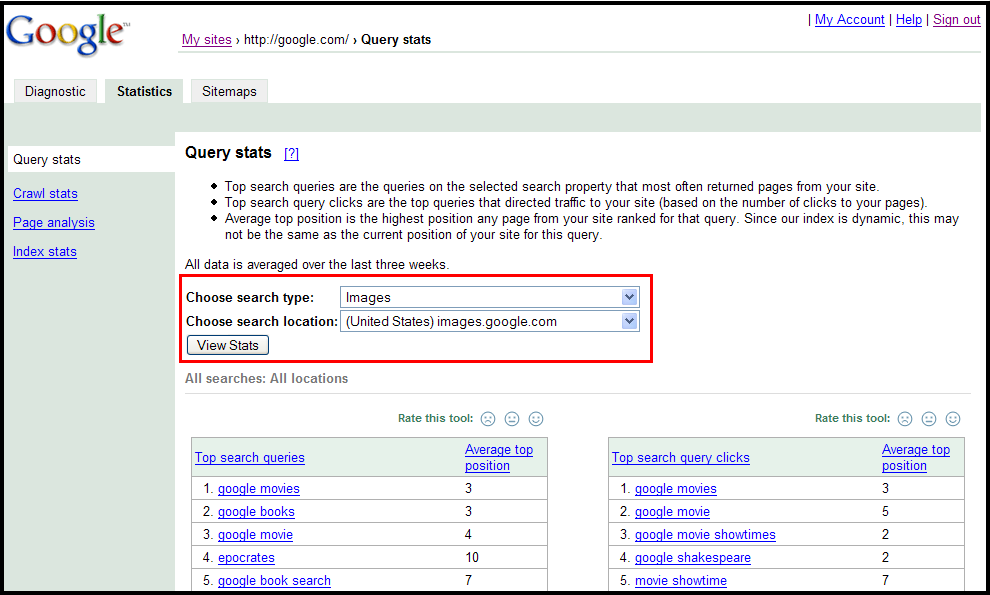
Using Google webmaster tools, learn which Google queries created clickthroughs to your site and where you were positioned in the search results for that query. You can also view data for individual properties and countries as well. For instance, you can see the queries from users searching Google Images in the United States that returned your site in the results. You’ll only see properties and countries for which your site has data.

5. Get re-included.
If your site has disappeared from the search results, read through the Google quality guidelines, then correct any problems on your site and request re-inclusion from your Google webmaster tools account. Please keep in mind that the reinclusion request form is only available to people using Google webmaster tools.
There's more.
Google webmaster tools are evolving, and we frequently add more features. Stay up to date on the newest features with the Google Webmaster Central blog and get your questions answered on the Google Webmaster Help discussion group.
Here's to building a loyal following for your website and, in turn, optimizing your AdSense earnings!
1. Submit all of your pages to the Google index – for free.
By using Google Sitemaps to submit your URLs, you help Google's web crawler do a more complete and efficient job of crawling your site. Sitemaps enables you to submit all of your pages to the Google index, and it's particularly useful for making sure that we know about all dynamically generated URLs or pages that are not adequately linked to on your site. But please note: submitting a Sitemap will not guarantee inclusion or influence your PageRank, and isn't a replacement for creating compelling and useful content.
2. Find out how Google sees your site.
Once you've made sure we have access to your site, you can see the common words used to link to your pages and that are seen by Google. This allows you to see trends in your site's content, and can help you determine why you may be ranking for particular keywords. You can also see which page has the highest PageRank by month. Some site owners are surprised to find that this isn't always the home page. If an internal page has the highest PageRank, you might consider spending more time optimizing the ads there.
3. Diagnose potential problems.
We let you know if, and why, we're having trouble accessing your site or specific pages. If we can't crawl a page, we can't index it -- so fixing any errors we list can help improve your overall coverage. If the AdSense Site Diagnostics tool shows that you're blocking pages from MediaPartners-Google (the AdSense crawler), you can use the robots.txt analysis tool of Google webmaster tools to test changes to that file and make sure those changes allow access. You can also see what pages you are blocking from other Google bots -- this lets you experiment with changes to see how they would affect the crawl of your site.
4. Find out which queries drive traffic to your site.
Using Google webmaster tools, learn which Google queries created clickthroughs to your site and where you were positioned in the search results for that query. You can also view data for individual properties and countries as well. For instance, you can see the queries from users searching Google Images in the United States that returned your site in the results. You’ll only see properties and countries for which your site has data.
5. Get re-included.
If your site has disappeared from the search results, read through the Google quality guidelines, then correct any problems on your site and request re-inclusion from your Google webmaster tools account. Please keep in mind that the reinclusion request form is only available to people using Google webmaster tools.
There's more.
Google webmaster tools are evolving, and we frequently add more features. Stay up to date on the newest features with the Google Webmaster Central blog and get your questions answered on the Google Webmaster Help discussion group.
Here's to building a loyal following for your website and, in turn, optimizing your AdSense earnings!
Monday, 31 July 2006
AdSense on Google Page Creator
We’re excited about Google’s new Labs creation, Google Page Creator. You can use it not only to easily design and publish web pages, but also monetize those pages using AdSense.
To assist publishers using Google Page Creator with code implementation, here are some instructions:
1. Log into your AdSense account at www.google.com/adsense .
2. From the AdSense Setup tab, customize and generate your AdSense code.
3. Copy the generated code from the 'Your AdSense code' box.
4. Log into your Google Page Creator account.
5. Select the web page you'd like to display AdSense ads.
6. Select the field where you'd like the ads to appear.
7. Click 'Edit HTML'.

8. Paste the AdSense code in the HTML source code of the page.

9. Click 'Save Changes'.
10. Publish your web page.

Your ads should appear shortly!
To assist publishers using Google Page Creator with code implementation, here are some instructions:
1. Log into your AdSense account at www.google.com/adsense .
2. From the AdSense Setup tab, customize and generate your AdSense code.
3. Copy the generated code from the 'Your AdSense code' box.
4. Log into your Google Page Creator account.
5. Select the web page you'd like to display AdSense ads.
6. Select the field where you'd like the ads to appear.
7. Click 'Edit HTML'.
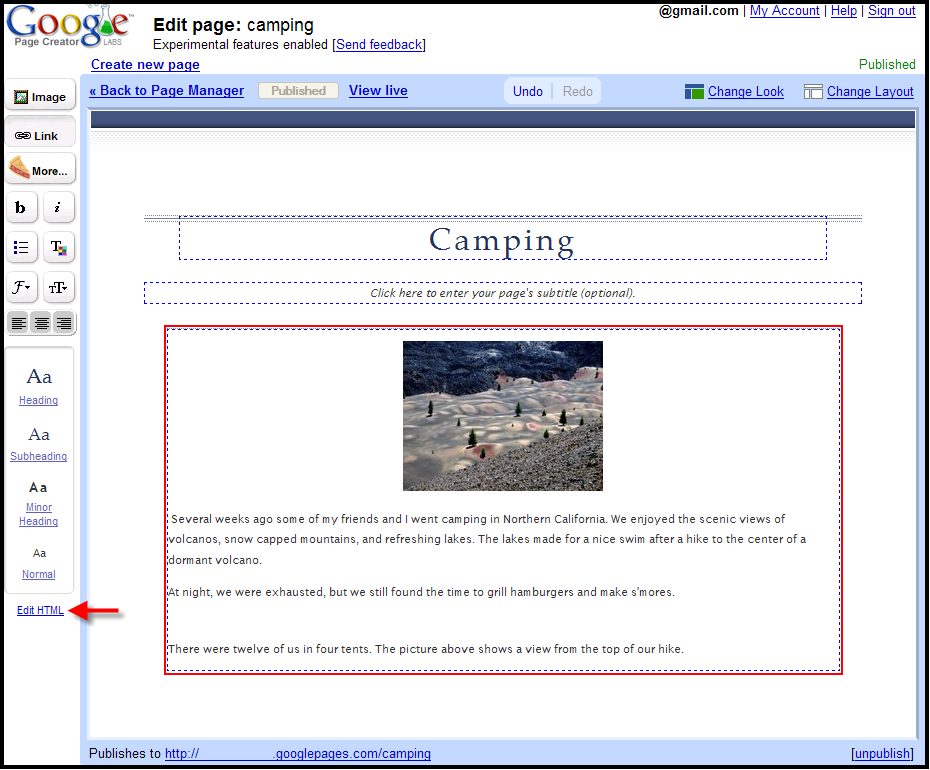
8. Paste the AdSense code in the HTML source code of the page.
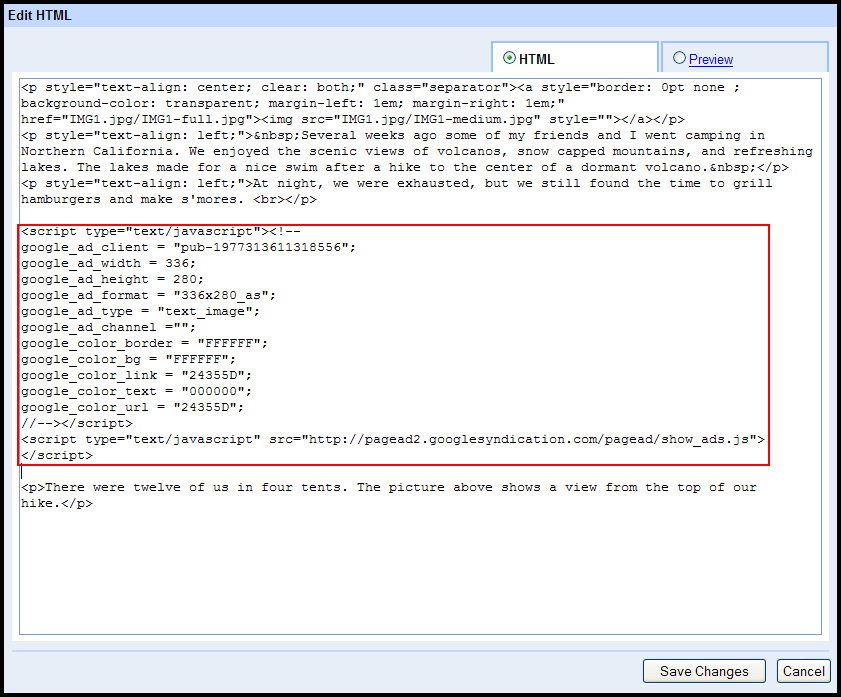
9. Click 'Save Changes'.
10. Publish your web page.
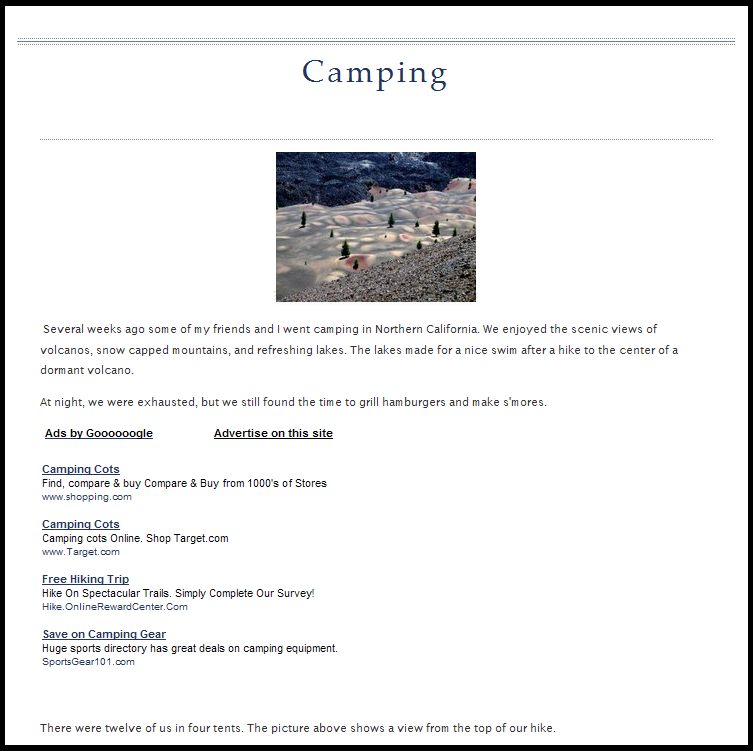
Your ads should appear shortly!
Tuesday, 6 June 2006
More than ads: video on your site
After our recent foray into video ads, there's been a lot of news and questions. So we thought we'd remind you that there are plenty of other ways you can leverage video to make your site more engaging for users, in addition to video ads.
By embedding Google Video content into your site, you can also add color to a story, illustrate complicated steps on a how-to page, or give content for a review (check out our new movie preview page). Recently, we made it much easier to let us host your content - you can upload from within your web browser and your videos will be available for your site within minutes. You'll also be able to get full reporting on any videos you've uploaded.
We've received feedback from publishers that adding video to your site is a great way to draw in more readers. It's easy to start: just find a video you like from Google Video or upload your own, then click on the embed link on the right side of any playback page to add it to your site.
By embedding Google Video content into your site, you can also add color to a story, illustrate complicated steps on a how-to page, or give content for a review (check out our new movie preview page). Recently, we made it much easier to let us host your content - you can upload from within your web browser and your videos will be available for your site within minutes. You'll also be able to get full reporting on any videos you've uploaded.
We've received feedback from publishers that adding video to your site is a great way to draw in more readers. It's easy to start: just find a video you like from Google Video or upload your own, then click on the embed link on the right side of any playback page to add it to your site.
Tuesday, 16 May 2006
Now more publishers can use Sitemaps
What keywords are people using to find your site in the Google search index? Is your robots.txt file blocking search engines from crawling your site? Whatever questions you have about your site's visibility, Google Sitemaps provides you with information that can help--and Sitemaps recently launched several new features you should know about:
New verification method
In the past, you needed access to your site's root directory to verify site ownership and create a Sitemap. This meant you couldn't create Sitemaps for many hosted sites, including Blogger.com sites like Inside AdSense. However, now more publishers can use Sitemaps. Sitemaps has launched a feature that allows publishers to use meta tags to verify site ownership. For example, if your site is hosted on Blogger.com, all you have to do is add a unique meta tag to your site's header to verify your Sitemaps account.
Re-inclusion request form
If your site violated Google's quality guidelines and was subsequently penalized--i.e., dropped from the Google search index--now you can submit a re-inclusion request using your Sitemaps account. Simply sign in, click the link, and fill out the form. This form is also available from the Summary page for sites that show violations.
For information about these and other newly launched Sitemaps features, visit the Inside Google Sitemaps blog.
New verification method
In the past, you needed access to your site's root directory to verify site ownership and create a Sitemap. This meant you couldn't create Sitemaps for many hosted sites, including Blogger.com sites like Inside AdSense. However, now more publishers can use Sitemaps. Sitemaps has launched a feature that allows publishers to use meta tags to verify site ownership. For example, if your site is hosted on Blogger.com, all you have to do is add a unique meta tag to your site's header to verify your Sitemaps account.
Re-inclusion request form
If your site violated Google's quality guidelines and was subsequently penalized--i.e., dropped from the Google search index--now you can submit a re-inclusion request using your Sitemaps account. Simply sign in, click the link, and fill out the form. This form is also available from the Summary page for sites that show violations.
For information about these and other newly launched Sitemaps features, visit the Inside Google Sitemaps blog.
Friday, 28 April 2006
Love Google Maps?
Show your visitors where you stand with the Google Maps API. The Maps API allows you to embed geographical information into your site using JavaScript. You can add overlays to your map including markers, polylines, and shadowed information windows. It's a great way to enhance your current site content, and best of all, using the Google Maps API is free.
To learn more, and to find out whether your site meets the terms of use, visit the Maps API FAQ.

To learn more, and to find out whether your site meets the terms of use, visit the Maps API FAQ.

Thursday, 9 February 2006
Ad Rank explained!
Ever wonder what determines the order in which ads appear on your site? Then you've wondered about the Google AdWords ad ranking system. AdWords is the advertising platform thousands of advertisers use to place their ads on the Google network. Once an ad is in the AdWords system, it competes against other ads to appear on relevant pages in the AdSense network. It's through this real-time dynamic auction system that ads are ranked. Those ads with the highest Ad Rank at any given moment are displayed on your site.
So, you ask, how is Ad Rank determined? While bid price (the price advertisers are willing to pay for each click per thousand impressions) is obviously an important factor, we also calculate advertiser Quality Score to make sure the best performing ads will always appear on your site. Quality Score takes into account factors such as an ad's relevancy and click-through rate (CTR) (i.e. how likely users are to click on a given ad) because a higher CTR sometimes outweighs the benefits of a higher bid price. This ensures that your site always displays the ads representing the highest revenue potential for you.
You might also wonder: "But image ads usually take up multiple ad slots -- does this limit the amount of money that I can make?" Good question, but no -- for an image ad to appear on your site, it has to produce an effective CPM greater than the sum of the individual text ads.
For a more detailed explanation about how Ad Rank is calculated, visit the AdWords Pricing overview.

UPDATED: Image
So, you ask, how is Ad Rank determined? While bid price (the price advertisers are willing to pay for each click per thousand impressions) is obviously an important factor, we also calculate advertiser Quality Score to make sure the best performing ads will always appear on your site. Quality Score takes into account factors such as an ad's relevancy and click-through rate (CTR) (i.e. how likely users are to click on a given ad) because a higher CTR sometimes outweighs the benefits of a higher bid price. This ensures that your site always displays the ads representing the highest revenue potential for you.
You might also wonder: "But image ads usually take up multiple ad slots -- does this limit the amount of money that I can make?" Good question, but no -- for an image ad to appear on your site, it has to produce an effective CPM greater than the sum of the individual text ads.
For a more detailed explanation about how Ad Rank is calculated, visit the AdWords Pricing overview.

UPDATED: Image
Subscribe to:
Posts (Atom)