We'll be performing routine AdSense maintenance on Saturday, May 13, at 10:00am PDT. During this time, you may not be able to access your account. However, your Google ads will continue to display, and stats and earnings will continue to accrue in your account.
As always, thanks for your patience!
Friday, 12 May 2006

Rock on with Dan Marcus, AdSense payment specialist

What do you do when you're not working?
Not working? I'm not sure I understand the question... Just kidding--I don't work that much. I'm usually playing guitar with my rock band, the Swamees, or my heavy-metal side project, the Gibbous Moon. (I've been assured that shamelessly self-promoting my band website is okay, though I guess I could be more discrete and rely strictly on the power of suggestion.)
When I'm not rocking out, I like riding my motorcycle, chillin' with the homies, and BBQ'ing. Oh yeah, and camping is just about the greatest thing ever--especially if it involves BBQs, guitars, and motorcycles.
When is EFT going to become available for more countries?
We recently launched EFT in a number of countries and are working to expand even further in 2006. We're also exploring alternatives for locations where EFT isn't a viable option.
One common misconception is that EFT simply involves linking our bank account to yours. Unfortunately, it's not quite that easy. To provide EFT, we not only have to gain access to closed or heavily regulated bank networks, but we must also comply with local tax and commerce regulations. As a result, linking our bank account to yours is not as straightforward as it seems.
What are your top tips for publishers?
1. Sign up for EFT if it's available in your country. EFT can help non-US publishers avoid paying bank fees, and it's more reliable than snail mail.
2. Make updates to your account information by the 15th day of the month. We start processing payments around the 15th, and changes to your address, hold status, or form of payment made after that date won't take effect until the following month.
3. Reduce banking fees by placing a self-hold on your account. If you're outside the US and receive USD checks, you can let your earnings accrue and then receive larger checks less frequently.
4. Make sure your mailing address is correct. PINs and checks will not arrive if your address is wrong.
5. Don't wait for help. Find answers without emailing us by checking out our Payments Guide, video demo, and AdSense Help Group.
6. Patience is a virtue. PINs and checks are sent by snail mail, which can be unpredictable in some countries. While they can get lost and damaged in transit, more often the mail is just slow.
Remember, once we've stopped a check the process can't be reversed. I can't tell you how many times a publisher requests a reissue and then receives the original check the next day. If your check is reissued, you won't receive your earnings for an additional month--so it's in your best interests to be patient!
What are your favorite websites?
Wow, this is probably the toughest question. Here are five of my favorites:
realultimatepower.net – This site simply rules.
alienlovespredator.com – Pure genius.
craigslist.org – I compulsively search for stuff to buy, sell, and trade--especially guitar equipment, concert tickets, and motorcycle parts.
Pandora.com – Discover all the bands you never knew you liked.
GasBuddy.com – Increasing in importance on a daily basis.
Wednesday, 10 May 2006
Get site-targeted with quality, placement and size
As someone on the inside track for site targeting, the AdSense team asked me to share a word with you regarding what advertisers are most keen on when selecting sites for their site-targeted campaigns.
For advertisers -- and especially traditional brand marketers -- the name of the game is brand engagement and association. When purchasing ad space, advertisers focus on three elements of a website: quality of content, physical placement of the ad unit, and ad unit size.
1. Quality - Let's face it, advertisers are all about attracting user interest. When selecting places to advertise online, they look for sites that incorporate high quality and unique content in combination with good navigation, layout and features. It goes to reason that if users like the site, then advertising on these sites will build positive brand association or "positive brand karma".
2. Placement - In site targeting, "above the fold" ad placements are important to advertisers because they're paying for these ads on a cost-per-thousand impressions (CPM) basis. Eye-tracking analysis has shown that users are more likely to engage with ad placements that appear in the upper left-hand corner of a page.

It's important to advertisers that when a page loads, people see and interact with the ad. The greater the level of user engagement, the higher advertisers are willing to bid to display on a site.
Opting into both text and image ads also helps, because it gives advertisers more options for what types of ads they can display on your site.
3. Size - In advertising, size does matter; bigger ads are more likely to be seen. The AdSense program offers many ad formats for you to use on your site. Among them, the 336 x 280 Large Rectangle, 300 x 250 Medium Rectangle, and 250 x 250 Square are the larger ad units and consequently, the ones advertisers most value. Average CPMs for these sizes are usually 300% higher than a typical 468 x 60 Banner ad.
Of course, incorporating these elements doesn't guarantee that your site will be site-targeted, but it can certainly increase the chances by making it more advertiser-friendly.
For advertisers -- and especially traditional brand marketers -- the name of the game is brand engagement and association. When purchasing ad space, advertisers focus on three elements of a website: quality of content, physical placement of the ad unit, and ad unit size.
1. Quality - Let's face it, advertisers are all about attracting user interest. When selecting places to advertise online, they look for sites that incorporate high quality and unique content in combination with good navigation, layout and features. It goes to reason that if users like the site, then advertising on these sites will build positive brand association or "positive brand karma".
2. Placement - In site targeting, "above the fold" ad placements are important to advertisers because they're paying for these ads on a cost-per-thousand impressions (CPM) basis. Eye-tracking analysis has shown that users are more likely to engage with ad placements that appear in the upper left-hand corner of a page.
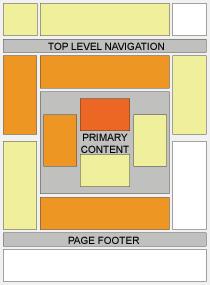
It's important to advertisers that when a page loads, people see and interact with the ad. The greater the level of user engagement, the higher advertisers are willing to bid to display on a site.
Opting into both text and image ads also helps, because it gives advertisers more options for what types of ads they can display on your site.
3. Size - In advertising, size does matter; bigger ads are more likely to be seen. The AdSense program offers many ad formats for you to use on your site. Among them, the 336 x 280 Large Rectangle, 300 x 250 Medium Rectangle, and 250 x 250 Square are the larger ad units and consequently, the ones advertisers most value. Average CPMs for these sizes are usually 300% higher than a typical 468 x 60 Banner ad.
Of course, incorporating these elements doesn't guarantee that your site will be site-targeted, but it can certainly increase the chances by making it more advertiser-friendly.
Monday, 8 May 2006
Unobtrusive ads can boost revenue
Sharon Maguire expected that matching her Google ads to her site, dogbreedinfo.com, would give it a cleaner look and feel that her visitors would appreciate. What she didn't expect was the large revenue increase spurred by her changes -- AdSense revenue nearly doubled, to $650 per day.
When generating her ad code, Maguire chose a white background and white borders to blend her ads more effectively into her site's overall color scheme. "Originally I'd chosen the standard 'Mother Earth' palette with the thin outline of a border," Maguire said. "I was happy with performance, but could see the revenue potential of the ad units. I discovered by simply removing the border around the ad units the AdSense revenue doubled."
Before:

After:

Many publishers have found that visitors are more likely to see and click on Google ads when the ads themselves blend cleanly into a site. At the same time, the "Ads by Goooooogle" tagline clearly distinguishes the Google ads from the site content, so users aren't confused.
You can create a custom color palette to help combat "ad blindness" and increase your site's revenue potential. If you've already seen similar successes, please share your story with us.
When generating her ad code, Maguire chose a white background and white borders to blend her ads more effectively into her site's overall color scheme. "Originally I'd chosen the standard 'Mother Earth' palette with the thin outline of a border," Maguire said. "I was happy with performance, but could see the revenue potential of the ad units. I discovered by simply removing the border around the ad units the AdSense revenue doubled."
Before:
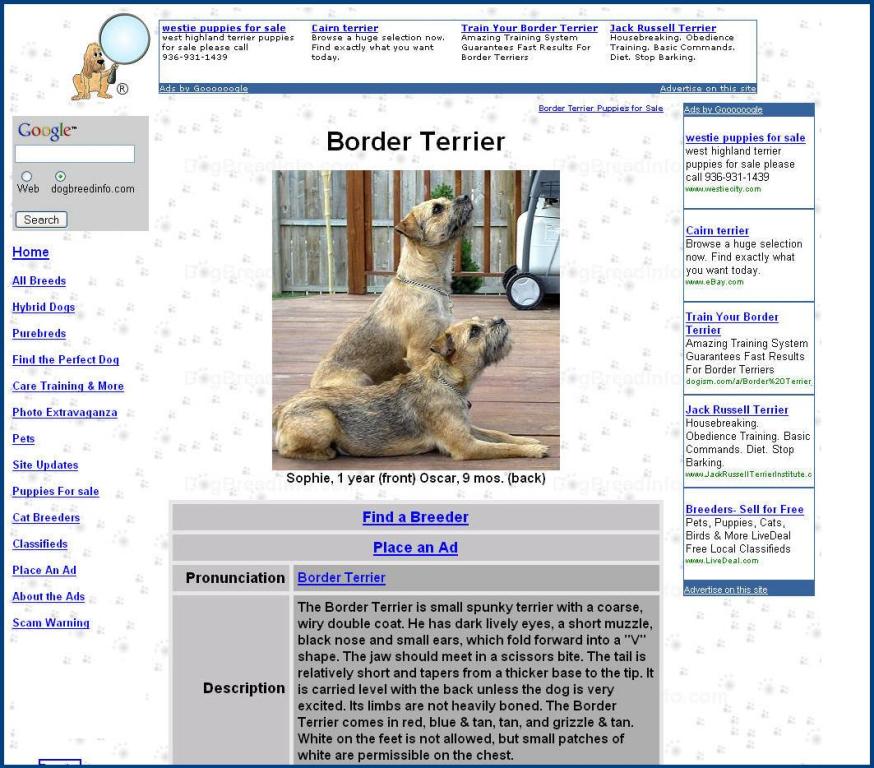
After:
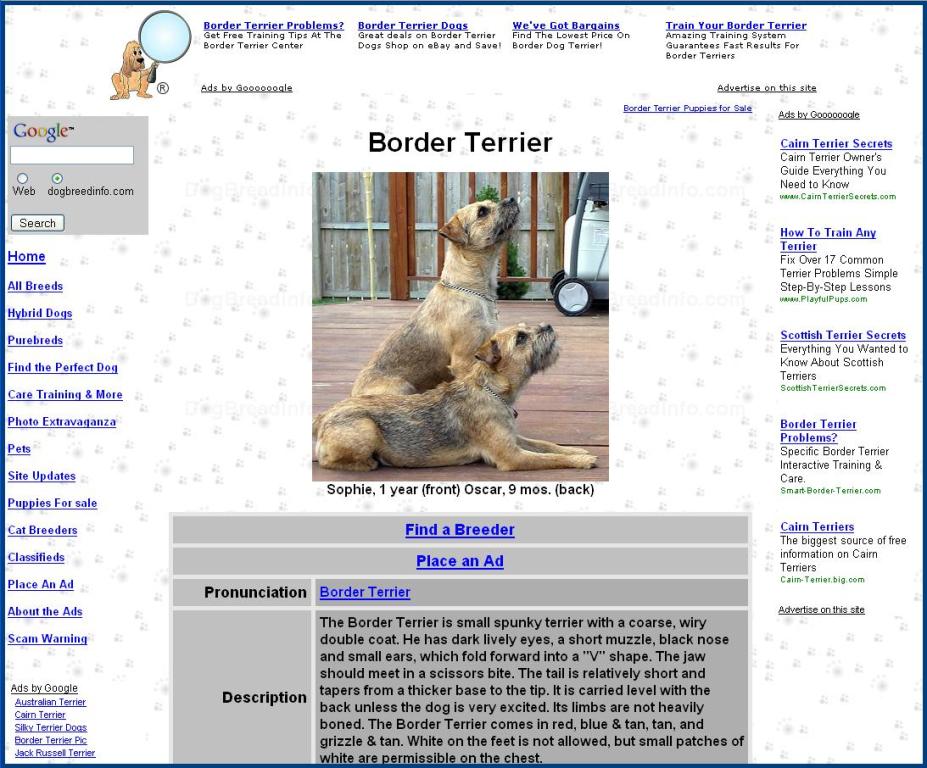
Many publishers have found that visitors are more likely to see and click on Google ads when the ads themselves blend cleanly into a site. At the same time, the "Ads by Goooooogle" tagline clearly distinguishes the Google ads from the site content, so users aren't confused.
You can create a custom color palette to help combat "ad blindness" and increase your site's revenue potential. If you've already seen similar successes, please share your story with us.
Friday, 5 May 2006
Referral buttons get a makeover
Every once in a while we like to give AdSense features a new look. This time, we're excited to announce the new and improved referral buttons for AdSense, Firefox with Google Toolbar, AdWords, Google Pack and Picasa. With the sleeker design comes a more web-friendly GIF image and several additional colors to choose from -- all to help the button feel more at home on your site.
The new buttons are currently available to US English publishers, and we hope to roll this out for all countries and languages supported by AdSense for content. To try out the new buttons, choose Referrals on your AdSense setup tab and follow the instructions to start displaying the button of your choice.


UPDATED pictures and for accuracy
The new buttons are currently available to US English publishers, and we hope to roll this out for all countries and languages supported by AdSense for content. To try out the new buttons, choose Referrals on your AdSense setup tab and follow the instructions to start displaying the button of your choice.

UPDATED pictures and for accuracy
Thursday, 4 May 2006
New referrals for Google Pack and Picasa
We're happy to announce that, in addition to AdSense, AdWords, and Firefox with Google Toolbar, you can now refer your users to Google Pack and Picasa. You'll earn up to $2 for each time a user installs Pack and up to $1 for each Picasa install. Although Picasa referrals will be available for several AdSense languages, Pack referrals are currently only offered in US English.
To display Pack and Picasa referral buttons on your site, all you have to do is select Referrals from the AdSense Setup page of your account, and then select the product of your choice. And remember, now US English publishers can use text links for your referrals.


UPDATED for accuracy.
To display Pack and Picasa referral buttons on your site, all you have to do is select Referrals from the AdSense Setup page of your account, and then select the product of your choice. And remember, now US English publishers can use text links for your referrals.


UPDATED for accuracy.
Wednesday, 3 May 2006
An 'AdSense Help'-ing hand
Since the AdSense Help Group launched, we noticed you've been having lots of interesting discussions about AdSense. We thought we'd address a couple questions that have come up fairly frequently in the Help Group.
My website tracking software is registering more impressions than my AdSense account -- why is there a discrepancy?
To provide more accurate information about ad performance, we count impressions only when the AdSense JavaScript is executed by a user's browser. Therefore, the impressions listed in your AdSense account may differ from statistics reported by third parties. For example, AdSense doesn't count impressions generated by:
I pasted AdSense ad code for two ad units into my site -- why is only one ad unit appearing on my page?
Don't worry, this is normal ad behavior designed to automatically optimize your site's revenue potential. Although you can display up to 3 ad units per page, sometimes only the first ad unit contains ads. When highly targeted ads aren't available for all your ad units, we'll display the additional ad units as transparent boxes rather than showing ads that our system determines would not perform well. As our ad inventory changes, or if your page content changes, you may start seeing ads appear in all of your ad units.
In the meantime, you can set up your ad code so that an alternate ad will appear when this happens.
My website tracking software is registering more impressions than my AdSense account -- why is there a discrepancy?
To provide more accurate information about ad performance, we count impressions only when the AdSense JavaScript is executed by a user's browser. Therefore, the impressions listed in your AdSense account may differ from statistics reported by third parties. For example, AdSense doesn't count impressions generated by:
Other spiders, robots, crawlers from other search engines Browsers that don't have JavaScript enabled or don't support JavaScript Browsers that don't support the iFrame tag Programs that people may have written to grab website content
I pasted AdSense ad code for two ad units into my site -- why is only one ad unit appearing on my page?
Don't worry, this is normal ad behavior designed to automatically optimize your site's revenue potential. Although you can display up to 3 ad units per page, sometimes only the first ad unit contains ads. When highly targeted ads aren't available for all your ad units, we'll display the additional ad units as transparent boxes rather than showing ads that our system determines would not perform well. As our ad inventory changes, or if your page content changes, you may start seeing ads appear in all of your ad units.
In the meantime, you can set up your ad code so that an alternate ad will appear when this happens.
Subscribe to:
Posts (Atom)