Before you begin optimizing your pages, it’s important to have channels in place so you can track the effectiveness of any changes you make. But what’s the difference between URL channels and custom channels -- and when should you choose one or the other? Let’s look at the benefits of each, and which type of channel is appropriate for which situations.
URL Channels
URL channels provide an effective way to track your ad performance on different sections of your site or on different domains. Since you don’t need to change your code at all, they're easy to use. If for example you have a blog about cars and another one about boats, you can create a URL channel for each one. Then, when you optimize, you can use your channel reports to determine how your changes affected the success of the ads on each blog.
Custom Channels
Custom channels are great for pages with multiple ad units, since you can use them to track different ad units on the same page. To implement them, you’ll need to generate new channel-specific ad code. Let’s say you have a page with two ad units – one on the left side and one on the right. You can create a custom channel for each one, giving them distinct names such as ‘Left_Ad’ and ‘Right_Ad’. After you’ve regenerated the ad code for each ad unit and pasted it back into your HTML source, you can view reports for each ad unit separately. You’ll be able to see which ad unit performs better, and whether a change like removing the borders affects your earnings.
If you’d like more details about using channels, there's a lot of useful information in our Optimizing with Channels guide. We hope that setting up channels will make it much easier to see the results of your optimization efforts right away.
Wednesday, 2 August 2006

Tuesday, 1 August 2006
'Tis the season to "Augtomize"
Inspired by the launch of the new and improved Optimization Tips page, our renewed enthusiasm for helping publishers optimize their sites has led us to deem August Optimization Month! Each week, we'll share insights and tips along with our best-kept secrets to optimize all aspects of your site. Whether you're looking to find better ad placement or formats, struggling to understand who your visitors are, or in need of ideas for making your content more engaging, we hope you'll get some answers here.
To follow along, we recommend checking the blog daily or subscribing to receive the posts by email. You can also stay on top of the optimization schedule by subscribing to the AdSense Calendar. Have an optimization success story? Share it with us! Or, if you're more comfortable with optimierung, optimalisatie, or optimización, follow along on our German, Dutch, or Spanish blogs.
On that note, I'm happy to kick off Week 1 of Optimization Month: testing and tracking optimization effectively. When you decide to experiment with a new ad format or color palette, you want to know just how much impact the changes have had. Get back to the basics and learn about the importance of channels and A/B testing when you optimize your site. We'll finish off the week with a favorite of mine, the top 3 tips for testing and tracking.
We're really excited about Optimization Month, and we hope you are too!
To follow along, we recommend checking the blog daily or subscribing to receive the posts by email. You can also stay on top of the optimization schedule by subscribing to the AdSense Calendar. Have an optimization success story? Share it with us! Or, if you're more comfortable with optimierung, optimalisatie, or optimización, follow along on our German, Dutch, or Spanish blogs.
On that note, I'm happy to kick off Week 1 of Optimization Month: testing and tracking optimization effectively. When you decide to experiment with a new ad format or color palette, you want to know just how much impact the changes have had. Get back to the basics and learn about the importance of channels and A/B testing when you optimize your site. We'll finish off the week with a favorite of mine, the top 3 tips for testing and tracking.
We're really excited about Optimization Month, and we hope you are too!
!أهلا وسهلا و مرحبا
Since we launched AdSense for search in Bulgarian and Greek, we’ve been working hard to keep expanding our language support. That’s why we’re excited to announce that AdSense for search is now available in Arabic!
To celebrate, we thought we'd enlighten you with some interesting facts about the language and the Arabic-speaking world:
Welcome to our Arabic publishers!
To celebrate, we thought we'd enlighten you with some interesting facts about the language and the Arabic-speaking world:
Arabic is spoken by over 323 million people worldwide as a first language, which is about the same as the number of native English speakers. Classical Arabic is the official language of over 20 countries and is the only form of Arabic taught in schools at all stages. Each country also has its own local dialect (such as Egyptian, Syrian, and Algerian), and these dialects are used in day-to-day spoken language. Many of the English words you might use on a daily basis are of Arabic origin, such as coffee (‘qahwah’), sugar (‘sukkar’), and cotton (‘qutn’). Checks were introduced in Arab countries as written agreements to provide payment at a later date.
Welcome to our Arabic publishers!
Monday, 31 July 2006
AdSense on Google Page Creator
We’re excited about Google’s new Labs creation, Google Page Creator. You can use it not only to easily design and publish web pages, but also monetize those pages using AdSense.
To assist publishers using Google Page Creator with code implementation, here are some instructions:
1. Log into your AdSense account at www.google.com/adsense .
2. From the AdSense Setup tab, customize and generate your AdSense code.
3. Copy the generated code from the 'Your AdSense code' box.
4. Log into your Google Page Creator account.
5. Select the web page you'd like to display AdSense ads.
6. Select the field where you'd like the ads to appear.
7. Click 'Edit HTML'.

8. Paste the AdSense code in the HTML source code of the page.

9. Click 'Save Changes'.
10. Publish your web page.

Your ads should appear shortly!
To assist publishers using Google Page Creator with code implementation, here are some instructions:
1. Log into your AdSense account at www.google.com/adsense .
2. From the AdSense Setup tab, customize and generate your AdSense code.
3. Copy the generated code from the 'Your AdSense code' box.
4. Log into your Google Page Creator account.
5. Select the web page you'd like to display AdSense ads.
6. Select the field where you'd like the ads to appear.
7. Click 'Edit HTML'.
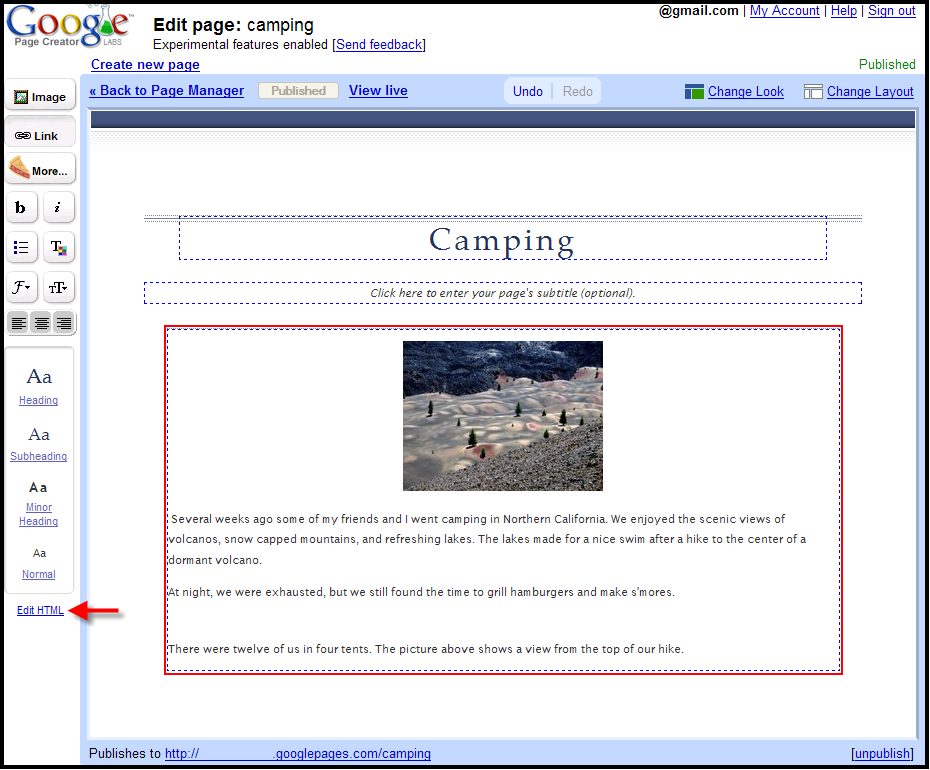
8. Paste the AdSense code in the HTML source code of the page.
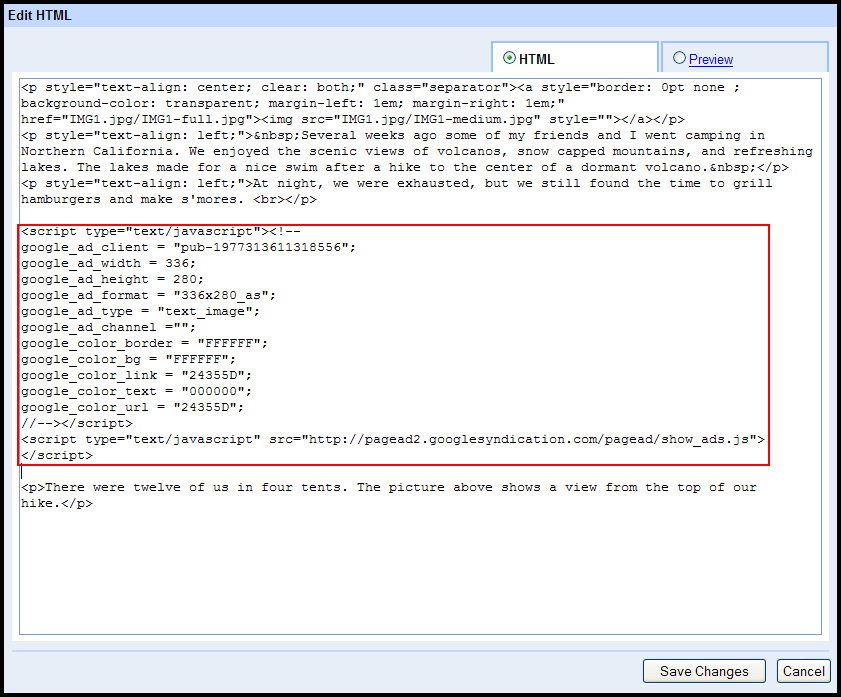
9. Click 'Save Changes'.
10. Publish your web page.
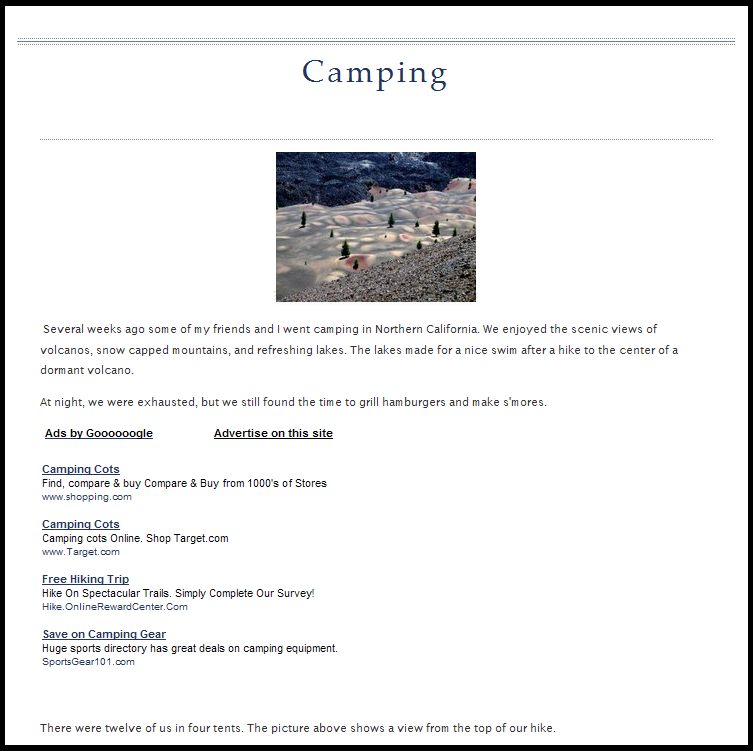
Your ads should appear shortly!
Friday, 28 July 2006
Maintenance on Saturday, July 29th at 10 am PDT
This Saturday (7/29), we’ll be performing routine system maintenance at 10 am PDT. Although you won’t be able to access your account for approximately 6 hours, ads will still be served to your pages, and your account stats and earnings will continue to be recorded.
Thanks for your patience – have a great weekend!
Thanks for your patience – have a great weekend!
Wednesday, 26 July 2006
Do you know the way to San Jose?
We hope so, because that's where we'll be from August 8th-9th. The Search Engine Strategies conference features a slew of informative speakers, sessions, and a trade expo. Among the people you might bump into at the Google booth are several of our optimization specialists -- they're excited to meet you in person and can help you optimize your site on the spot. Also, if you've been longing to give us your feedback in person about optimization or about AdSense in general, this is your chance.
On the fence about whether to attend? Thanks to our friends over in Google Analytics, we're happy to offer publishers a promotional "Priority" code for 20% off when you buy a Conference or Day pass to SES San Jose. The Priority code is 20GOO2 (two-zero-gee-oh-oh-two). To redeem the Priority code and purchase a pass, go here or follow the link below:

If you've been thinking about going, we hope this will encourage you to attend. We look forward to seeing you there!
On the fence about whether to attend? Thanks to our friends over in Google Analytics, we're happy to offer publishers a promotional "Priority" code for 20% off when you buy a Conference or Day pass to SES San Jose. The Priority code is 20GOO2 (two-zero-gee-oh-oh-two). To redeem the Priority code and purchase a pass, go here or follow the link below:
If you've been thinking about going, we hope this will encourage you to attend. We look forward to seeing you there!
Tuesday, 25 July 2006
Where did my 'framed pages' checkbox go?
Some of you may have noticed that the 'framed pages' checkbox has disappeared from your account – but don't worry, you can still place ads on framed pages by generating your code as you would for any other page. You'll no longer need special ad code, and we'll target ads based on the text content in the frame where the ad code is pasted. To receive relevant ads, please be sure to paste your ad code into the same frame as the primary content of your page.
Subscribe to:
Posts (Atom)